- Study
- Alumni
- What’s On
- Riley Theatre
- Take Part
- About
- Support us
- Search
Course Award: | Duration: | Early Application Deadline: | Final Application Deadline: | Places: |
MA | 1 year Full-time | Midnight 25 January 2026 | Midnight 26 April 2026 | 12 - 15 |
Master The Process of Dance Making
The MA Dance & Creative Enterprise is a practice-centred postgraduate programme designed for choreographers, directors, producers, and creative practitioners who are ready to advance their artistic vision and develop as independent dance and performance makers.
This course supports you to reimagine your creative practice while developing the professional, entrepreneurial, and business skills needed to sustain and grow a career in the arts. Throughout the programme, you will have the opportunity to:
You’ll be part of a supportive and stimulating environment where creating work is at the heart of the experience. Across the year, you’ll produce several original projects in response to different briefs, perform in peer-led works, and may take on roles such as rehearsal director or assistant director for projects within the school.
The programme values collaboration, experimentation, and a skilled approach to making dance and performance. It places particular emphasis on developing entrepreneurial thinking – enabling you to take ownership of your ideas, lead projects with confidence, and navigate the creative industries as a self-sustaining artist. With strong foundations in crafting choreography, physical practice, and performance, the course equips you with the artistic, practical, and organisational tools to choreograph, direct, and produce your own work in a professional context.
Eligible home-fee paying postgraduate students can apply for a postgraduate loan from the Student Loans Company to help with course fees and living costs
For detailed information on tuition fees, financial support, and associated costs for all courses, visit our Fees and Finance page here: www.nscd.ac.uk/study/fees-finance/postgraduate
Home | Overseas |
£11,330 | £19,570 |
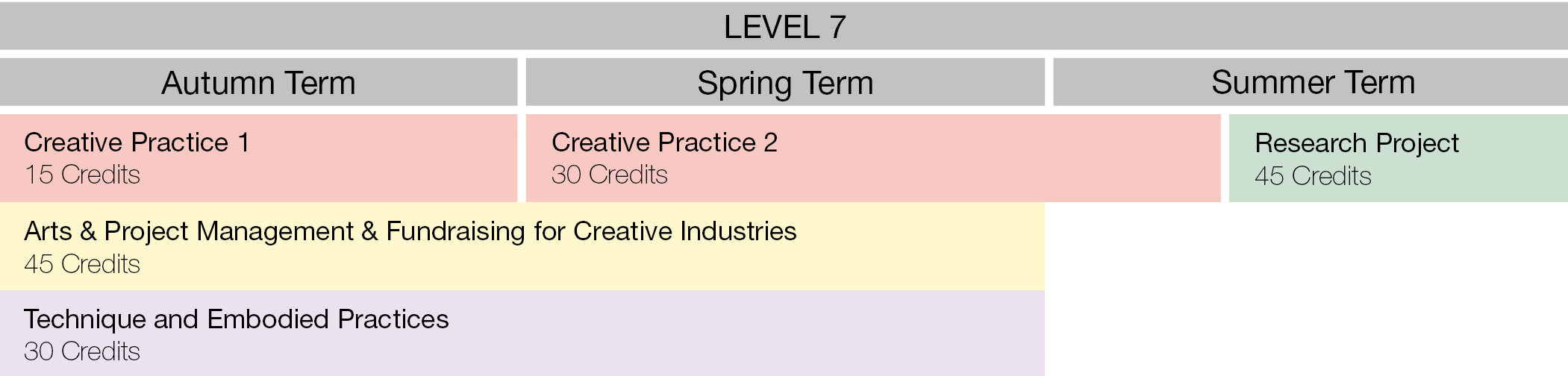
This module is the first of two modules that focus on students developing their skills as creators and makers both individually and in small groups. They will explore a range of ideas and processes related to choreography, collaboration, improvisation, movement research, conceptual, and performance art, to identify, investigate and develop their own artistic practice.
Within Creative Practice 1, the emphasis will be on students making and exploring choreographic practices, and methods for devising material, with students investigating a range of modes and approaches. Students will be given the opportunity to experiment and explore these different methods through directed study, tasks and viewing, culminating in the devising of a creative project. Although these sessions will be largely practical, classes will be supported by historical and theoretical underpinnings to ensure that students are developing their research, reflective and contextual skills within a practice centred frameworks.
This module is the second of two modules that focus on students developing their skills as creators and makers both individually and in small groups.
In Creative Practice 2, students will continue their exploration of creative approaches, investigating the challenges and opportunity of short and larger scale works, collaboration across art forms, and how to best utilise the skills they’ve learnt to realise their artistic ideas. Students will be supported to develop their practice as independent artists, including developing the skills and knowledge required to articulate and contextualise their practice within the contemporary dance landscape.
Although these sessions will be largely practical, students will be supported by historical and theoretical underpinnings to ensure that students are developing their research, reflective and contextual skills within a practice centred frameworks.
This module is designed to equip students will the necessary skills to successfully navigate developing, managing, fundraising and marketing their own artistic projects. The module will consider the scope and definition of a project, its significance as an instrument of change, and the roles and responsibilities of people within it. This exploration will include the application of a range of project management tools, exploration of the theoretical and practical underpinnings of industry funding for the arts, alongside tradition and digital approaches to marketing and how these can successfully be implemented.
The module will develop the students’ understanding of the Cultural and Creative Industries and their role and function within economic and political landscapes. There is scope for students to find their own parallels and share information from a global community perspective. Students are introduced to the laws surrounding intellectual property rights and the implications on funding streams in relation to these.
This module allows students the opportunity to examine the creation of a significant arts project and write a proposal that informs how their idea is feasible, manageable and could be brought to a successful conclusion in time parameters and within a specified budget. This will include explorations around project concept and vision, planning and scheduling, budgeting and fundraising, marketing and audience engagement, logistics and production, risk management, and documentation and evaluation.
This module is designed to enable students to utilise classes and workshops to develop their understanding of performance, creative and devising processes, to ensure that they are equipped to physically contribute effectively in studio-based environments. Students will experience a range of sessions designed to extend their understanding of performance interpretation, physical execution of technical material and also provide strategies for movement observation and analysis which are key in supporting all-round continual development.
Classes will be led by a range of tutors and will ensure that students experience relevant styles and approaches which are current in the dance community. There will be a focus on individual personal practice, enhancing skills of reflection to ensure that students are able to identify and apply their skills in a range of contexts, thus ensuring the versatility required of dance artists in today’s artistic landscape.
In this module, students will undertake a substantial and focused research project based on a critical and systematic understanding of current knowledge. Research outcomes may take a range of forms including performative or choreographic work, lecture demonstration or dissertation. Students will be expected to draw on their experiences from earlier in their MA programme, with the opportunity to utilise this expertise within practice centred research frameworks.
The module will equip students with a range of supporting skills to undertake this project successfully, including individual tutorial support focused on their research work, and working in a structured research environment. Student outcomes will be presented in the most effective mode for their work as appropriate to research at Level 7, include supporting contextual information as appropriate to the research field. Where any students work collaboratively, they will provide evidence for their individual contribution and research enquiry.


The school is well equipped to facilitate students’ work in state-of-the-art facilities not shared by any subject area other than dance.
Graduates of the MA Dance & Creative Enterprise course are well-equipped to pursue diverse and dynamic careers within the dance and performing arts sectors. They often take on roles as independent choreographers, directors, producers, and creative leaders, creating original work and leading projects across a variety of settings. Many go on to establish their own companies or creative enterprises, while others collaborate with established organisations in producing, curating, and arts management roles.
The course’s strong focus on entrepreneurial and business skills means graduates are confident in managing the practical aspects of their careers, including fundraising, marketing, and project development. This holistic preparation allows them to navigate the complexities of the creative industries with agility, whether working freelance, in collaborative collectives, or within institutional frameworks.
Graduates engage with a wide range of opportunities, including national and international festivals, commissioning platforms, residencies, and community-based projects. They are often active contributors to the broader cultural landscape, developing innovative approaches to dance and performance that respond to contemporary social and artistic contexts. Overall, the MA fosters graduates who are adaptable, resourceful, and visionary, ready to shape the future of dance and creative enterprise.
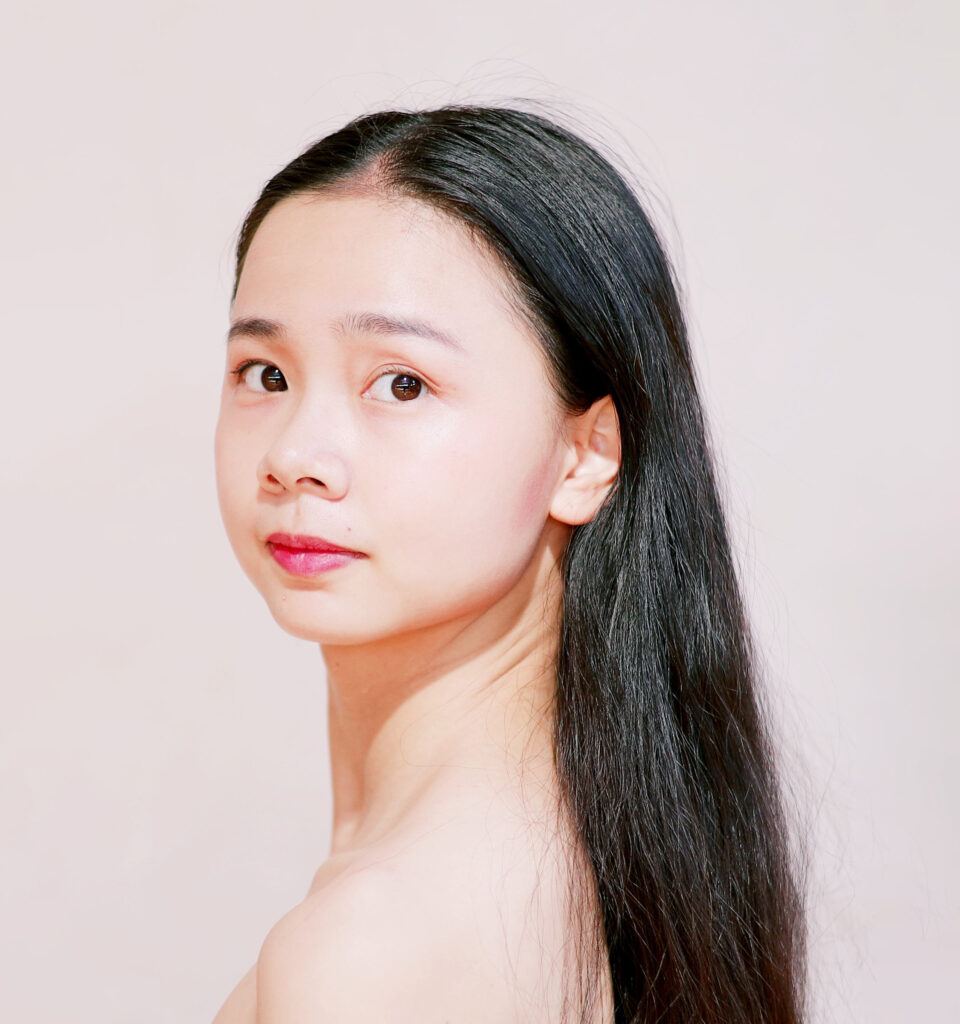
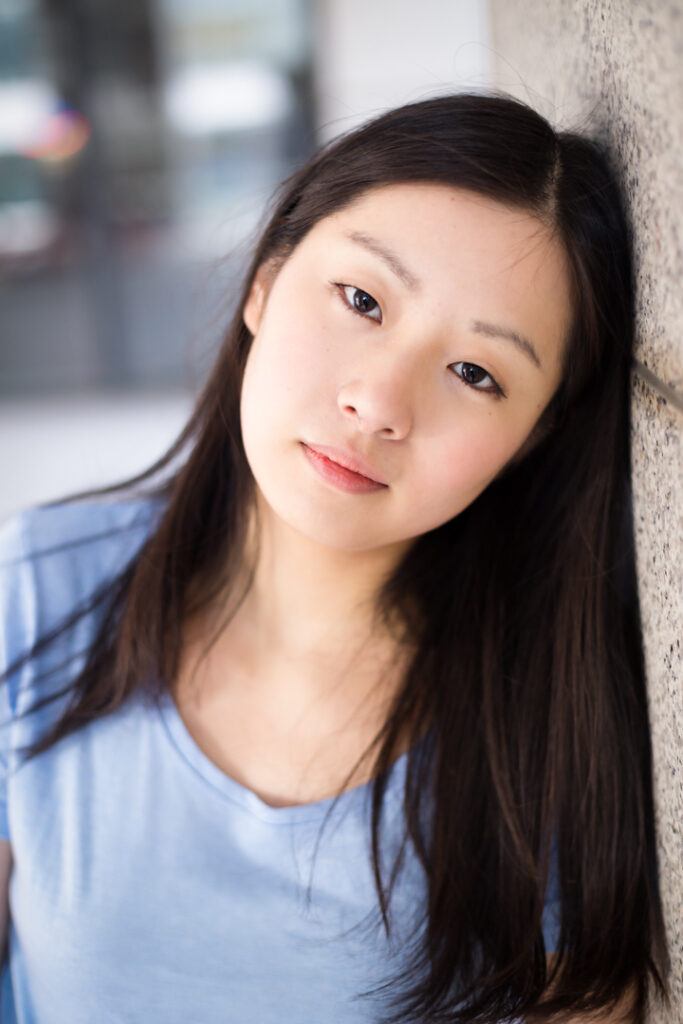
Secured Global Talent Visa and currently working as a freelance dance artist, performer and teacher

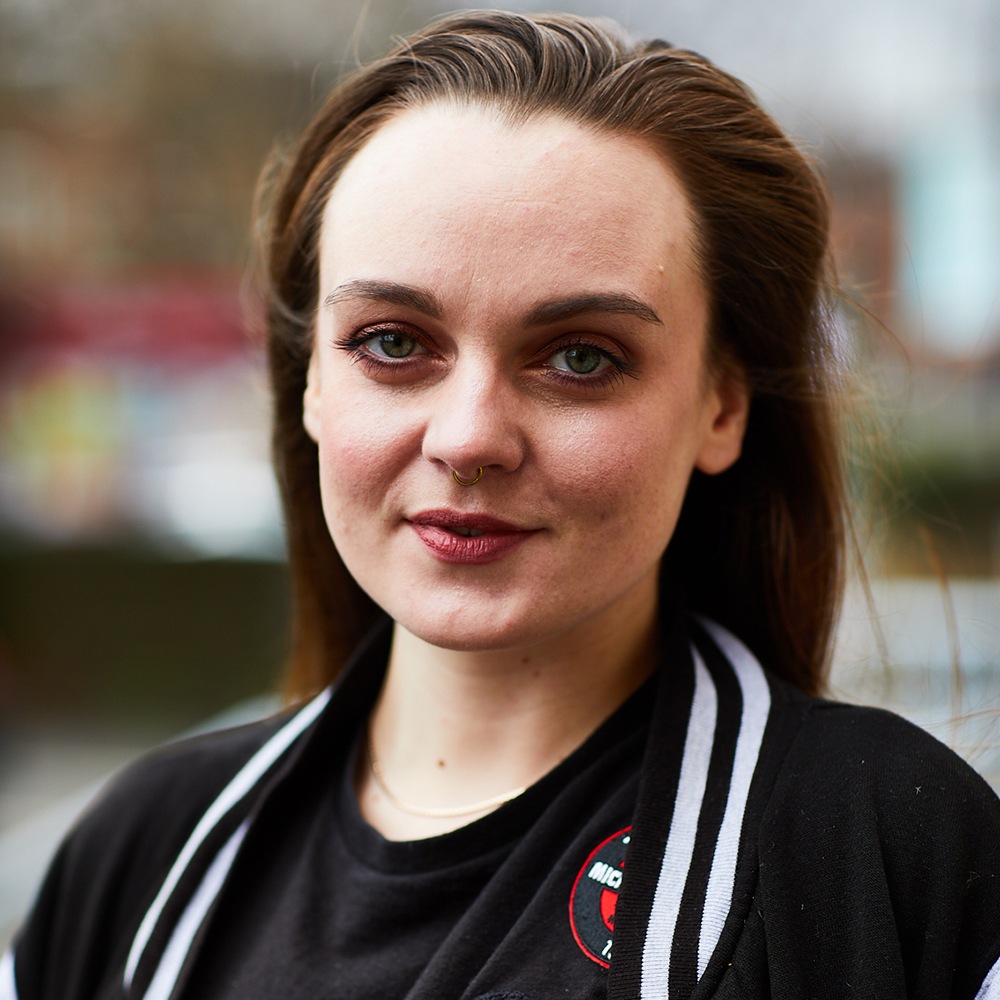
Dance Outreach Education Coordinator, Hong Kong Dance Company

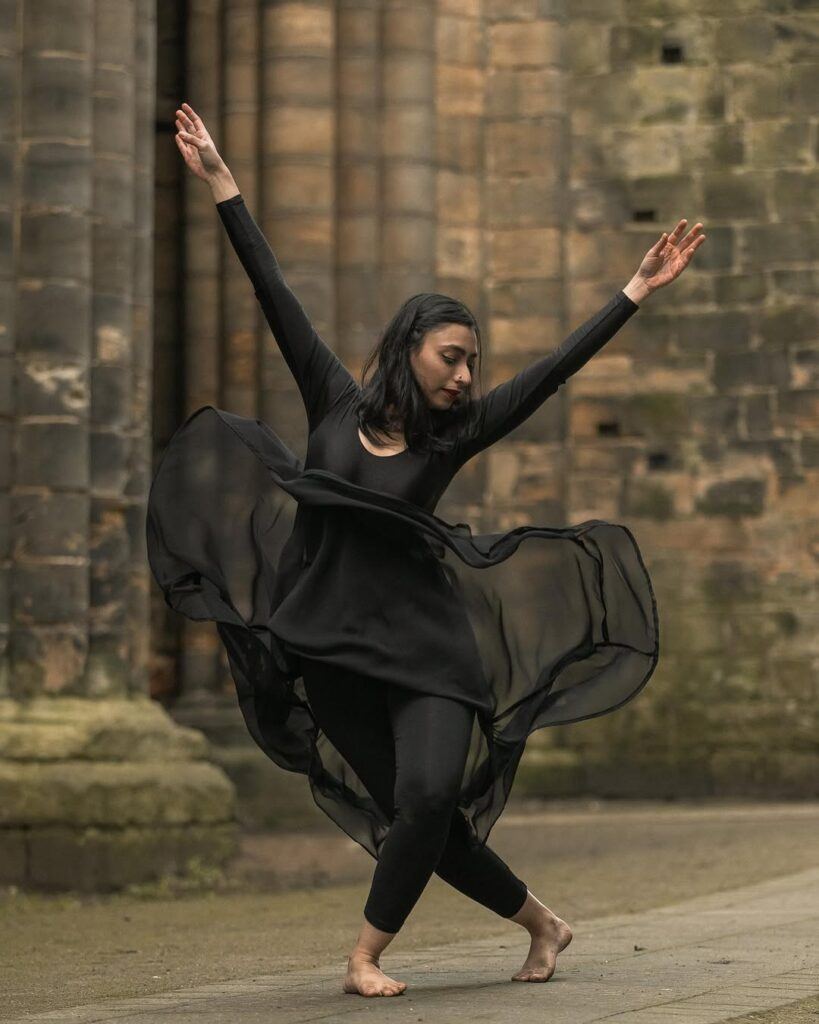
Freelance Artist and Producer
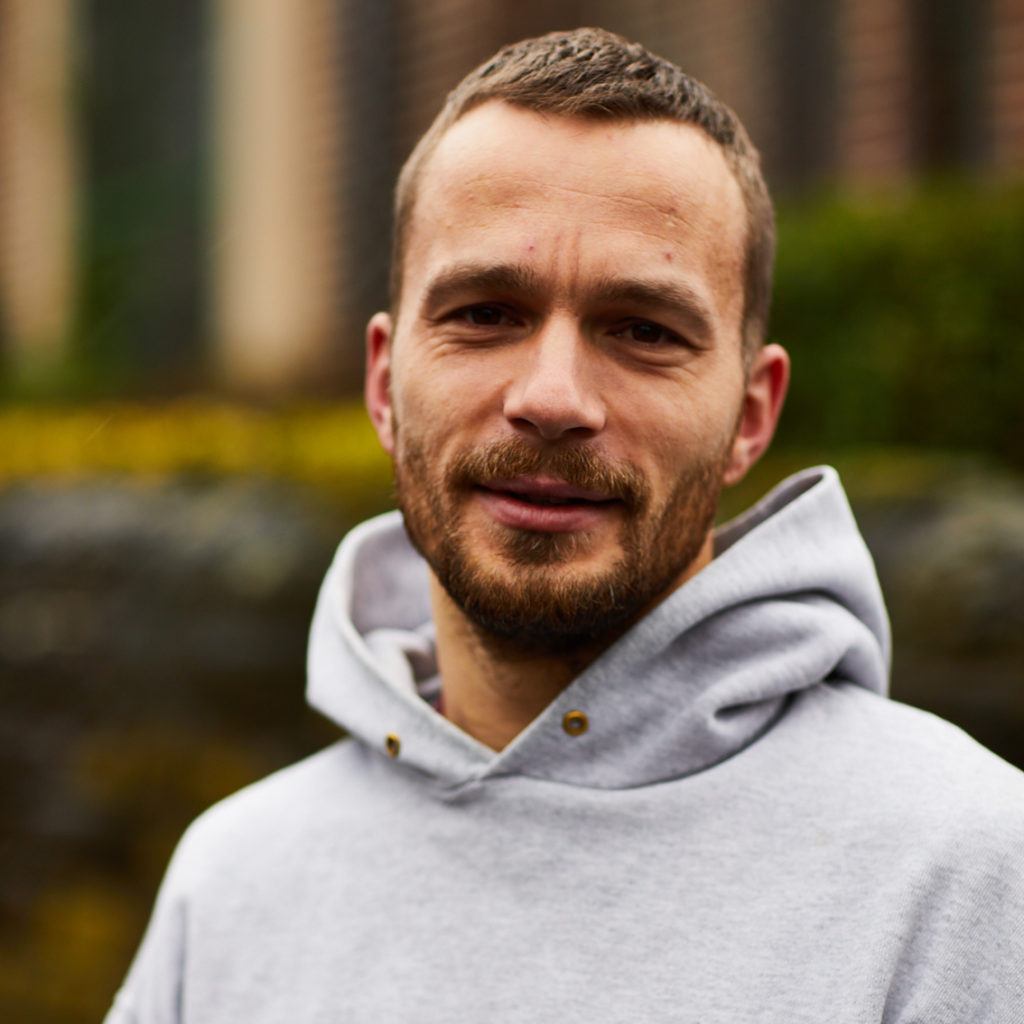
Freelance Circus Artist
Entry is through a successful application and interview. There is no audition for this course.
This course is open to graduates of two or three-year dance/performance training courses inc. theatre and other art forms at Higher Education level, or artists with professional experience and equivalent vocational performing arts training.
Please see the Overseas Student pages for detailed English Language entry requirements.
Any questions about any of the above can be directed to admissions@nscd.ac.uk
Firstly, you will need to submit an application via our online application portal.
The application will include:
For more information, visit the How to Apply page.
Candidates that are successful at application stage (Step 1) will be invited to an online interview with the Programme Lead.
For more information, visit the How to Apply page.
Demonstrate a strong artistic perspective and a desire to explore and expand their work.
Motivated by inquiry and driven to ask questions of themselves, their work, and the wider creative context.
Recognise the value of working with others and embrace creative exchange, dialogue, and shared authorship.
Ready to engage with diversity of thought and open to discovering fresh perspectives and new creative approaches.
At NSCD, we understand that the dance industry is demanding, that’s why 100% of students requesting wellbeing support are seen within a week, demonstrating our commitment to student resilience. Student support is important because it directly affects academic success, wellbeing, and long-term development.
Learn more about how NSCD’s Student Services can assist you with academic, wellbeing, disability, and injury support: www.nscd.ac.uk/study/student-life/student-services
Student SupportAs part of your decision-making process, we appreciate you will want to research potential programmes of study ahead of application deadlines. To enable you to do this, we work hard to ensure that our website is as up to date as possible.
Although we try to ensure that this is as current as possible, there are always changes we make to ensure that the course is as vibrant and up to date with sector requirement as possible. Dance is a dynamic, fast-moving sector and our courses evolve to ensure they reflect and respond to the industry’s needs.
Sometimes it may be necessary to change course content, delivery and entry requirements, if we believe it will enable us to improve the high-quality experience we offer. Changes sometimes comes because of student feedback/consultations, external examiner feedback and consultation with industry partners.
All reasonable care has been taken to ensure course information is accurate, however NSCD cannot guarantee all courses will be available in exactly the form and detail described here. We encourage you to regularly check the pages of the course(s) you are interested in. At Open Days, Auditions, and Interview Days we will take the opportunity to inform you about any proposed changes and will also notify you if any changes are made after you have accepted an offer.
Our courses are made up of a series of modules. Some are compulsory and some optional, however, we may not be able to offer the full list of modules every year. Option availability will depend on how many students choose a particular option. For an option to run we usually stipulate that 13 students have chosen to take the option. When you accept your offer, please bear in mind that on rare occasions, we may not be able to offer all of the optional modules. Before each year’s teaching starts you will discuss your preferred options with the Head of Faculty and Curriculum Leads who will try to ensure you are able to take them but cannot guarantee it.